
Interpreters Through Times – Episode 3
May 15, 2026
Vivien Batory (Denmark)
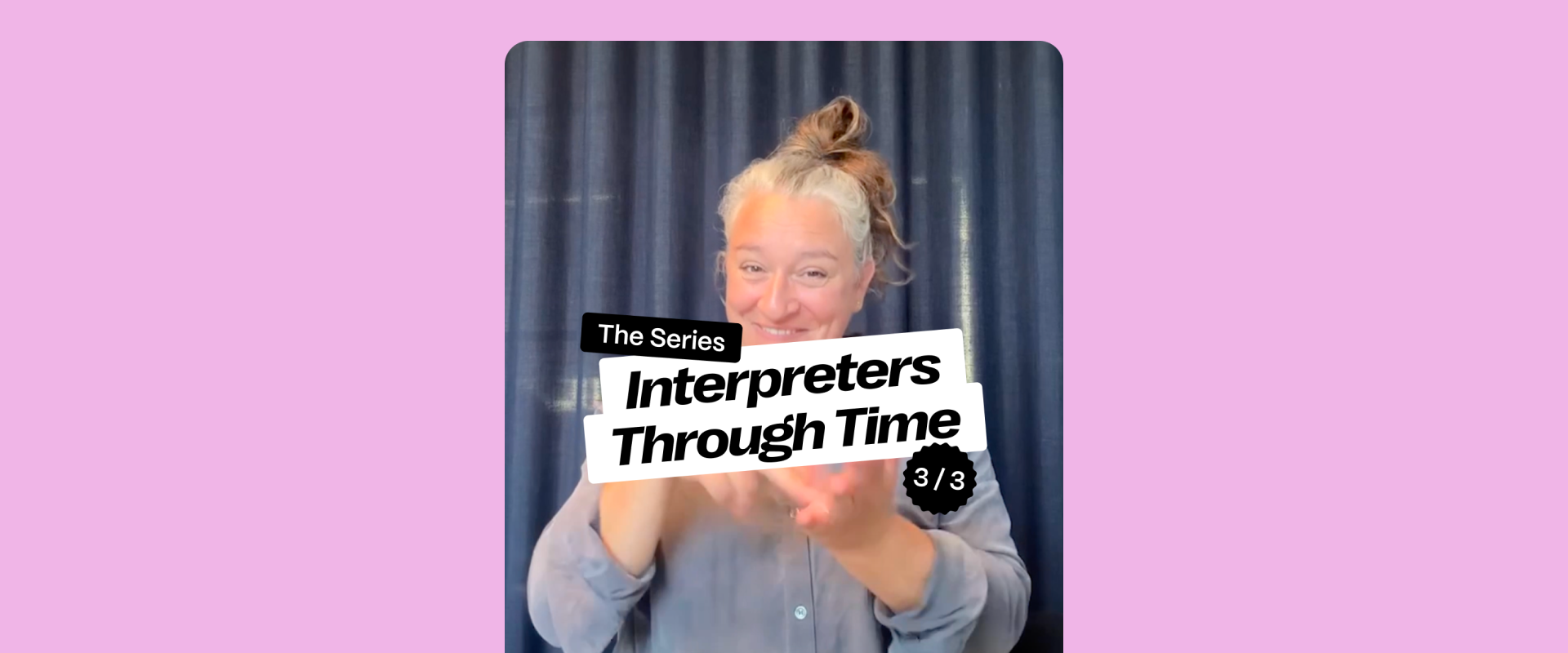
The third episode of Interpreters Through Time features Vivien, a Deaf interpreter from Denmark whose career reflects the development of Deaf interpreting practice over the past decades.
Drawing from more than 20 years of experience, Vivien reflects on language, teamwork and the barriers Deaf interpreters have faced in accessing professional recognition and training.
Growing up in a Deaf family and community shaped her relationship with interpreting from an early age. She describes how many Deaf people naturally develop interpreting and mediation skills throughout childhood by navigating communication in hearing environments.
Vivien’s professional journey began through collaboration with another Deaf interpreter in International Sign settings and later expanded into television work. One of the major turning points in her career was becoming involved in televised news interpretation in Denmark. At the time, Deaf interpreters in television settings were still new and often met with hesitation or scepticism.
Her reflections highlight how teamwork and trust between Deaf and hearing interpreters became essential in creating new professional opportunities. She also points to the importance of supportive colleagues who recognised Deaf interpreters’ competencies and helped challenge existing attitudes within the profession.
Another central theme in Vivien’s testimony is access to education. Despite her extensive experience and qualifications in other fields, interpreter training programmes remained difficult to access for Deaf interpreters. Traditional expectations within programmes often failed to recognise sign-to-sign interpreting as a professional competency in its own right.
Throughout the interview, Vivien emphasises the creativity, adaptability and linguistic awareness required in interpreting work. Whether in conferences, television or international settings, she describes interpreting as a constant process of analysing audiences, anticipating communication needs and adapting language choices accordingly.
Her reflections also underline the importance of visibility and representation. By stepping into spaces where Deaf interpreters had rarely been seen before, she contributed to changing perceptions of what Deaf interpreters could achieve professionally.
Through Vivien’s story, this episode highlights how Deaf interpreters have contributed to shaping the profession through persistence, collaboration and lived experience.